
Mentorship welcomes applicants from every background and stage of the journey. Enrollment is intentionally limited each cycle — apply before spots fill.
Mentorship Pathways
Three structures. One approach to preparation.
Each pathway is designed for a different stage of the admissions journey. They are not tiers; they are distinct structures. The right fit depends on where you are, not how much you want to invest.
12 months
$5,000
1-Year Mentorship
Focused preparation for applicants within the final year of their application journey.
Strategic, intensive mentorship for applicants who are ready to apply and need focused, expert support to present their strongest possible candidacy.
Meeting structure
Monthly sessions, 1 hour each
24 months
$7,000
2-Year Mentorship
Structured development across two intentional years of preparation.
A structured two-year developmental arc for applicants who want time to build their clinical foundation, refine their narrative, and apply with confidence.
Meeting structure
Monthly sessions, 1 hour each
36 months
$10,000
3-Year Mentorship
Long-horizon mentorship beginning from the earliest stages of aspiration.
A comprehensive three-year mentorship relationship for applicants who are beginning early and want sustained, experienced guidance at every stage of their journey.
Meeting structure
Monthly sessions, 1 hour each
How to choose a pathway
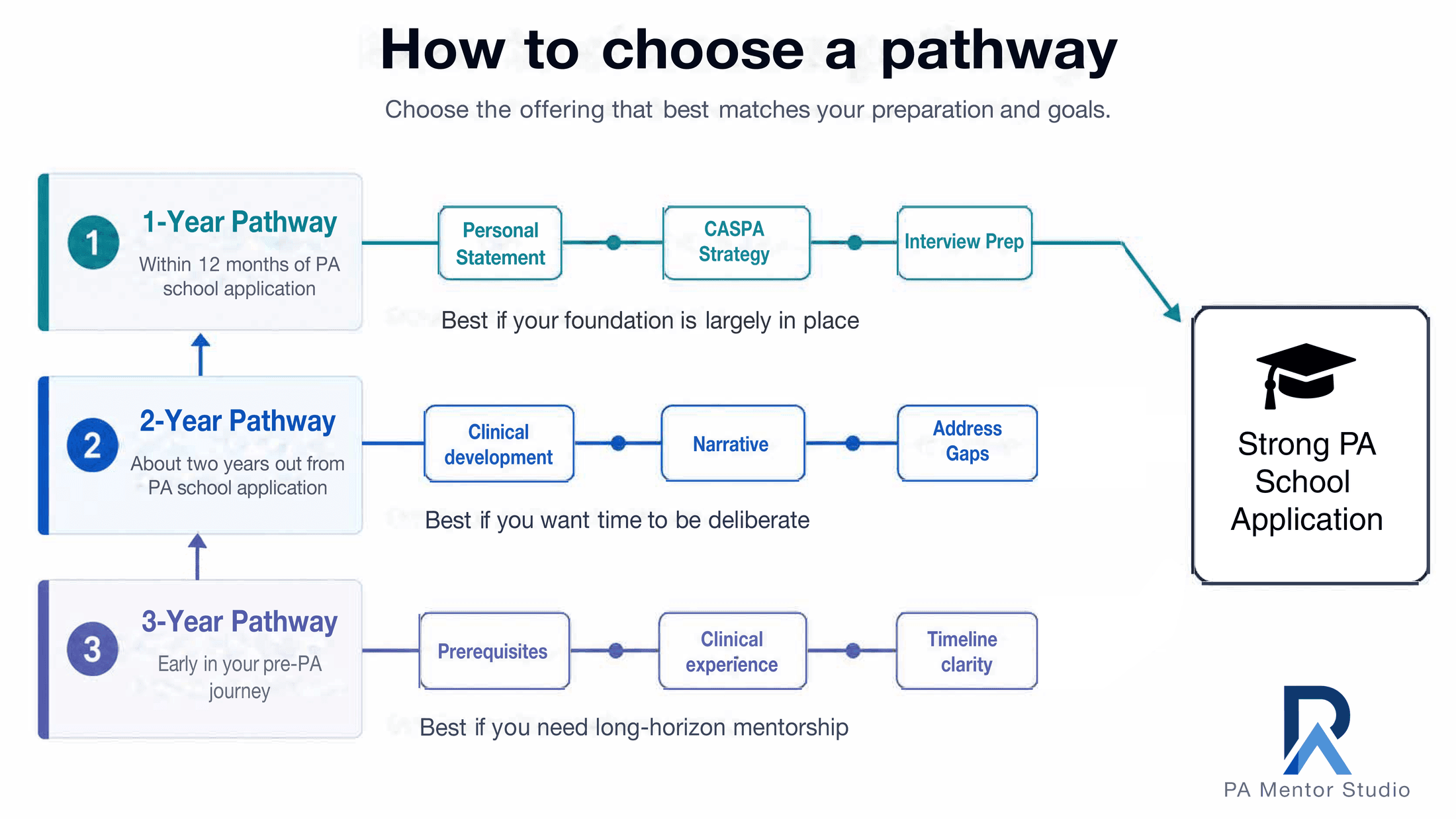
If you are within 12 months of your intended application cycle and your foundational preparation, including GPA, clinical hours, and references, is largely in place, the 1-Year pathway is likely the right fit.
If you have two years before your target cycle and want time to be deliberate about your clinical development and narrative, the 2-Year pathway provides that structure.
If you are early in your pre-PA journey, still completing prerequisites, beginning clinical experience, or uncertain about your timeline, the 3-Year pathway is designed for sustained, long-horizon mentorship from the ground up.
If you are uncertain which pathway fits, the application process includes a consultation. Questions about fit are part of what that conversation is for.
Applying now, or want a shorter commitment?
The three pathways above are structured, multi-month relationships. If you are already applying for interviews, close to submitting, or simply looking for focused help without a longer-term commitment, individualized review meetings are also available.
These sessions are built around your current situation rather than a fixed curriculum, typically ranging from 1 to 3 meetings depending on what you need: reviewing an application before submission, preparing for an upcoming interview, or getting a second opinion at a specific decision point.
If this sounds like a better fit than the pathways above, reach out and we can figure out what makes sense together.
Why enrollment stays small
PA Mentor Studio works with a deliberately small number of students at any given time. Each pathway involves direct, ongoing engagement: reviewing application materials in depth, thinking through clinical and academic decisions as they come up, and being genuinely available between sessions when something changes.
That level of attention has a ceiling. The number of students accepted each cycle is set by how much sustained time one mentor can actually give, not by how much demand there is. Once the roster is full, new applicants move to a waitlist rather than being folded in to make room.
Applications are reviewed individually.
Enrollment is limited. If you are ready to apply, begin there. If you have questions, the FAQ covers most of what applicants ask before applying.